Design & Systems
A Tiny Keychain With a Bigger Purpose
A tiny 3D-printed keychain with a surprisingly useful job. See how a simple QR code helps connect people with Soroptimist of the Langleys — and why good UX doesn’t always happen on a screen.

There are plenty of ways to tell someone about an organization.
You can give them a brochure. Send them a link. Tell them to Google it. Spell out the website while they awkwardly type it into their phone.
Or, apparently, you can put the whole thing on a keychain.
That’s where these little blue Soroptimist International of the Langleys keychains came from.
They’re small, 3D printed, easy to carry around, and have a very simple job: make it easier to connect someone with Soroptimist of the Langleys when the opportunity comes up.
And yes, the QR code actually works.
So, What Exactly Is It?

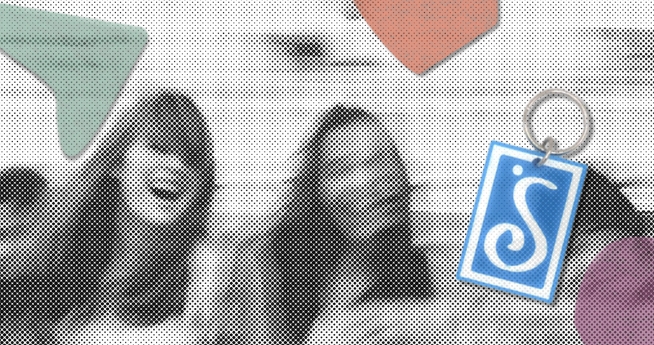
From the front, it’s a little blue-and-white keychain featuring the Soroptimist “S.”
Flip it over and there’s a QR code that connects people with Soroptimist International of the Langleys.
That’s it.
No app. No complicated instructions. No tiny brochure folded into an even tinier keychain.
Just scan the code and go.
It means someone can keep one on their keys, purse, backpack or wherever else keychains tend to migrate and have an easy way to share SIL when it comes up naturally in conversation.
Instead of:
“You should look them up. It’s Soroptimist… S-O-R-O…”
you can just hand them the keychain.
Much easier.

Who Is Soroptimist of the Langleys?
Soroptimist International of the Langleys is part of a larger organization working to improve the lives of women and girls through education, empowerment and access to opportunity.
Locally, that means supporting women in the Langley community through programs and initiatives designed to create real, practical opportunities.
One of those is the Live Your Dream Education & Training Award, which provides financial support to women who are working toward education or training while also carrying significant financial responsibilities.
Sometimes the biggest barrier between someone and a useful resource isn’t whether that resource exists.
It’s whether they know it exists.
Which brings us back to the tiny blue rectangle.
Why Is a UX Company Making Keychains?
There’s a personal connection behind this one.
Tesserac UXD founder Vanessa Turke is also a member of Soroptimist International of the Langleys, so when the opportunity came up to create something useful for the organization, it was a natural little project for us to take on.
And sometimes, apparently, supporting your community means firing up the 3D printer.
The Physical World Is Part of the User Experience Too
We spend a lot of time thinking about what happens after someone reaches a website.
Can they find what they need?
Do they understand where to go?
Is the information readable?
Can they actually use the thing?
But there’s another question that’s easy to overlook:
How did they get there in the first place?
A person’s experience with an organization doesn’t begin when a webpage loads.

Maybe someone hears about SIL while talking to a friend.
Maybe they meet a member at a community event.
Maybe somebody notices the keychain hanging from a bag and asks what it is.
Those little interactions are part of the experience too.
The QR code simply creates a bridge between the two.
Real-world conversation → scan → digital information.
No searching required.
And that is a surprisingly useful job for something that fits in the palm of your hand.
Also, We Have a 3D Printer
There is another, considerably less philosophical reason these exist.
We can make them.
Digital fabrication gives small organizations an interesting middle ground between homemade materials and ordering hundreds or thousands of promotional products.
Need a handful? Make a handful.
Want to change something? Change the design.
Want to try a different attachment? Print one and see if it’s terrible.
It allows the object to evolve without requiring a giant production run.
And there’s something rather fitting about that approach for a community organization: make what you need, learn from it, and improve it as you go.
Tiny Things Can Remove Tiny Barriers
This isn’t a revolutionary piece of technology.
It’s a keychain.
But good design doesn’t always need to be revolutionary.
Sometimes it just removes one annoying little step.
Someone doesn’t have to remember a website.
Someone else doesn’t have to search for the organization.
An SIL member or supporter doesn’t have to explain where to find more information.
Scan.
There it is.
Removing one tiny bit of friction probably isn’t going to change the world.
But if it helps one more person discover an organization, program or opportunity that could be useful to them?
That’s a pretty good day’s work for a keychain.
Want One?
Good news: you don’t have to be a Soroptimist member.
If you support what SIL does, want an easy way to share their work, or just think it’s a pretty nifty little keychain, you can get one too.
Keep it on your keys. Clip it to a bag. Give one to somebody else.
And the next time someone asks what that little blue S is, you’ve got an answer conveniently dangling right there.
Tiny keychain. Bigger purpose.