Design & Systems
The Hidden Cost of Being the Hero in Your Own Business
How many important decisions in your business exist only inside your head? As businesses grow, founders often become the bottleneck—not because they lack capability, but because their knowledge, values, and decision-making haven't yet been shared. Discover why distributing knowledge is one of the most important investments you can make for sustainable growth.


Most businesses begin with a hero.
The founder answers every phone call.
Solves every customer problem.
Knows every password.
Approves every invoice.
Remembers every little detail that keeps the business moving.
In the early days, that’s often exactly what’s needed.
But somewhere along the way…
The business grows.
The customers grow.
The opportunities grow.
And without realizing it, the founder becomes something they never intended to become.
The bottleneck.
Not because they aren’t capable.
Because they are.
Heroics feel good
Being needed feels good.
When a customer has a problem and you solve it…
You know you’ve created value.
When an employee gets stuck and you have the answer…
You know you’ve helped.
There’s immediate feedback.
Immediate satisfaction.
Immediate proof that you’re contributing.
Planning next year’s product roadmap doesn’t feel like that.
Documenting a process doesn’t feel like that.
Improving your website doesn’t feel like that.
Building a hiring process doesn’t feel like that.
Those things are quieter.
The rewards arrive months later.
Which means it’s perfectly understandable that many entrepreneurs drift back toward the work that reminds them they’re indispensable.
 Vanessa
Sometimes the business outgrows the hero
There comes a point where solving every problem yourself no longer helps the business.

It limits it.
Every question waits for you.
Every decision waits for you.
Every approval waits for you.
Your team isn’t slow because they lack ability.
They’re waiting for traffic to clear.
The difficult part is that this often feels responsible.
After all…
Nobody knows the business better than you do.
You’re probably right.
But that isn’t the same question as: Can someone else learn?
“They should already know.”
I’ve heard variations of this many times.
“They should know how to do this.”
Maybe.
But how would they?
One of the biggest surprises for new leaders is discovering how much of their business exists only inside their own head.
Your standards.
Your priorities.
Your values.
Your definition of “good enough.”
None of those are obvious to someone else.
They’re learned.
The bread test
Imagine asking someone to pick up a loaf of bread on their way back to the office.
They proudly return with the cheapest loaf in the store.
In their mind, they’ve done exactly what you wanted.
They saved you money.
But you were imagining something completely different.
You wanted fresh sourdough from the bakery because quality matters more than price.

Neither of you is wrong.
You simply optimized for different values.
The task wasn’t unclear.
The values were.
This happens inside businesses every day.
Employees aren’t always guessing what to do.
They’re guessing what matters most.
- Speed?
- Quality?
- Cost?
- Creativity?
- Consistency?
- Customer experience?
Without shared values, people make reasonable decisions that accidentally disappoint one another.
UX Law Memo:
Mental Model
“A compressed model based on what we think we know about a system and how it works.”
Connection:
A Mental Model is the understanding people build about how a system works based on their previous experiences and expectations. When a system aligns with those expectations, people can make better decisions with less effort.
The Bread Test is really a story about conflicting mental models.
You asked for bread. Your employee heard: “Buy bread.”
You meant: “Buy the kind of bread I would choose.”
Both people acted logically—they were simply working from different mental models of what success looked like.
Businesses experience this constantly. Employees don’t just need instructions; they need a shared understanding of how the organization thinks..
Parallel takeaway:
Great UX isn’t about teaching users every possible action. It’s about designing experiences that match how they already expect things to work.
Likewise, great leadership isn’t about answering every question. It’s about helping your team build a shared mental model of your business so they can make confident decisions without needing you every time.
Trust isn’t built through mind reading
Many entrepreneurs say they don’t fully trust anyone else with their business.
What we really mean is…
They haven’t yet built a shared understanding of success with their team.
Trust grows when expectations become visible.
Not because people become perfect.
Because they no longer have to guess.
A simple checklist.
A definition of done.
A few guiding principles.
A conversation about what matters most.
These are small things.
But they quietly remove hundreds of tiny decisions that used to flow back to the owner.
What would you do with the space?
Here’s a question I’ve been thinking about.
If your business no longer needed you to solve every small problem…
Who would you become?
Would you finally launch that new product you’ve been sketching for years?

Open a second location?
Build an online store?
Reach customers outside your local community?
Invest in your brand?
Explore artificial intelligence?
Develop a new service?
Partner with another business?
Or perhaps…
You’d simply leave work early one afternoon and have dinner with your family.
Growth doesn’t always mean doing more.
Sometimes it means finally having enough space to choose.
One small shift
You don’t need to stop being the hero tomorrow.
Your business probably still needs you.
But perhaps this week, instead of answering one question immediately…
Ask yourself something first.
“Is the answer in my head… or could it live somewhere my whole team can find it?”
If it’s only in your head, don’t just answer the question.
Teach the value behind the answer.
Because businesses don’t grow when founders become more heroic.
Businesses scale more effectively when knowledge is distributed, not concentrated.
And over time, that shift reduces dependence on any single person.
- If you disappeared for two weeks, what knowledge would disappear with you?
- What is one decision your team could make confidently if they understood not just what to do, but why?
- What knowledge exists only in your head today that your future business will eventually need to share?
This blog is part of a larger conversation
Many organizations don’t struggle because people lack talent.
They struggle because important knowledge is invisible, assumptions stay unspoken, and systems quietly become dependent on a handful of individuals.
If this topic resonated with you, you may also enjoy:
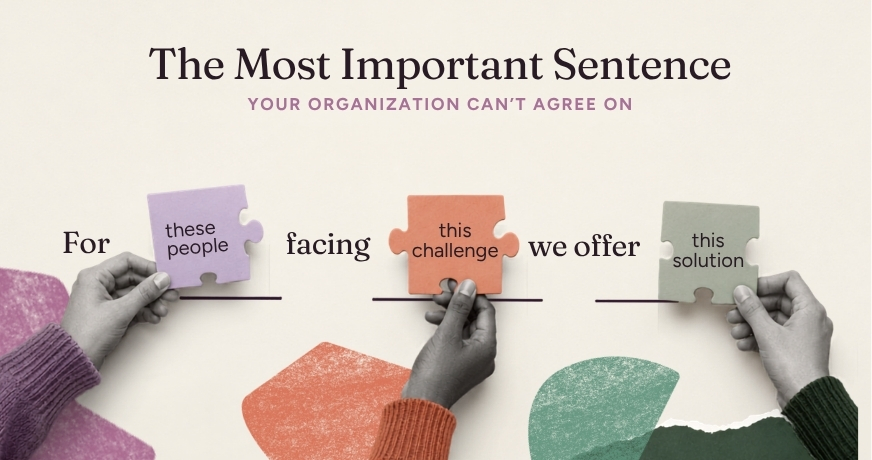
- The Most Important Sentence Your Organization Can’t Agree On — why teams often move in different directions despite sharing the same goals.
- Why Your Business Always Feels Two Weeks Away — how constant firefighting crowds out strategic work.
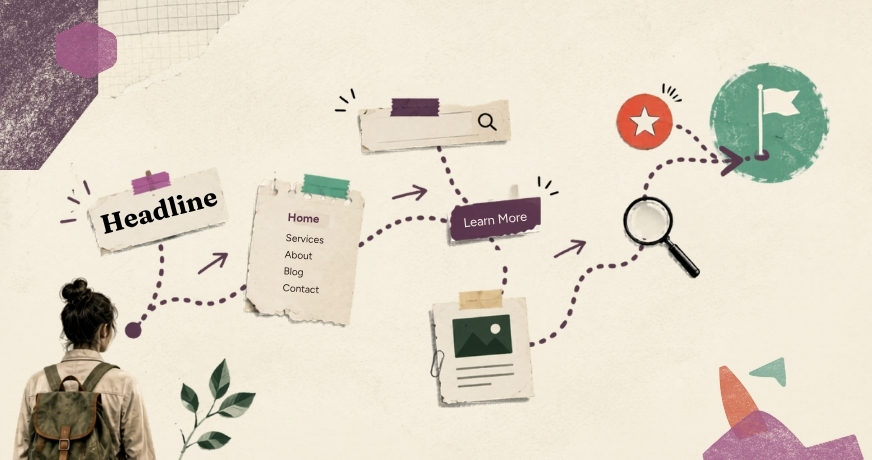
- Information Scent — what happens when people can’t find the information they need, whether they’re customers or colleagues.
Together, these articles explore a common question:
How do we design organizations that are easier for humans to understand, navigate, and grow within?