Said Quietly
Said Quietly: An Introduction
What does it mean to be a person in a world increasingly shaped by systems, algorithms, and uncertainty? Said Quietly is a place to explore technology, history, identity, and the strange experience of living through a moment that feels bigger than we can quite name.

How I Ended Up Here
Hi, my name is Vanessa. For a long time, I thought I worked in technology.
I started working in web design in 2006, during a time when most organizations still thought websites were primarily an IT problem.
By 2008, I had started asking what visitors to a client’s website actually wanted. At the time, I was mostly trying to help organizations make better decisions about content.
By 2010, I was promoting UX services professionally. At the time, “mobile responsive design” was often seen as a more legitimate budget item because it produced visible development work.
The internet was changing quickly then. Honestly, it still is. We were all improvising a little.
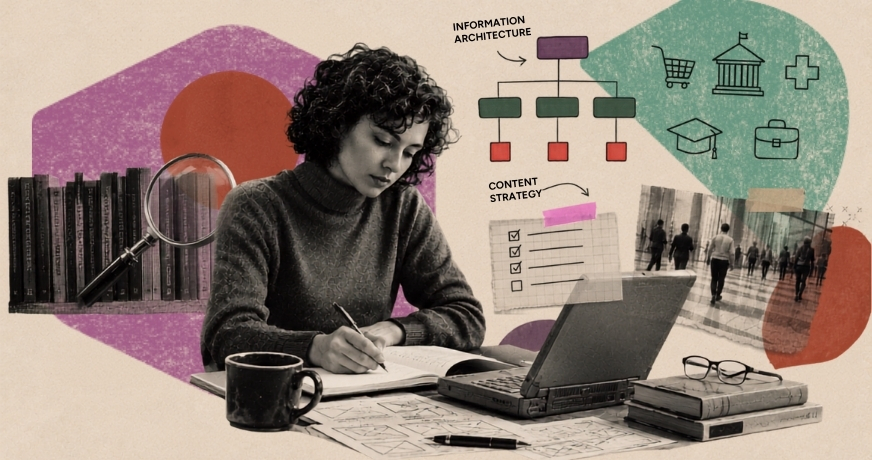
By 2012, I had moved fully into UX research, along with information architecture and content strategy.
Part researcher. Part interpreter. Part accidental anthropologist of modern life.
For nearly twenty years, I’ve worked on digital projects across the public sector, ecommerce, professional services, health, and higher education.
UX Was Never Really About Screens
I always understood the UX work was about people. That part was never the surprise.
What surprised me was how much of a person arrives with them when they sit down in front of a screen.
Early in my career, UX optimization was mostly about improving comprehension, usability, and responding to user preference. Red button or blue button. Simpler navigation. Clearer copy.
But over time, I began noticing how profoundly stress, grief, uncertainty, cognitive overload, culture, identity, and emotional state shaped a person’s ability to navigate successfully.
People trying to navigate systems while tired. Distracted. Grieving. Overwhelmed. Anxious. Confused. Lonely. Busy. Burnt out. Sometimes all at once.
UX work means noticing patterns. Watching how humans adapt to systems. Then trying to make those systems feel a little more human in return.
And over time, the work changes you.
Especially research.
The Emotional Reality of Digital Systems
There is a misconception that stories about technology are somehow less emotional than other human stories. As though digital experiences exist in a separate category from “real life.” But technology is now tangled into nearly every part of modern existence. Our relationships, jobs, health, education, identities, finances, communities, and attention spans all pass through systems now. Often dozens of them before breakfast.
The emotional reality comes with us.
Some of the user studies I participated in over the years stayed with me long after the interviews ended. Some conversations affected me so deeply that I would quietly weep afterward before moving on to the next meeting.
Not because someone was using a website incorrectly.
Because people reveal parts of themselves while trying to navigate systems.
One project involved conversations with participants who identified as First Nations, invited to point out aspects of a webpage that felt culturally insensitive to them. On the surface, it sounded like a straightforward usability activity. But those conversations were not really about button placement or navigation labels. They became conversations about history, representation, trust, exclusion, and the exhausting labour of repeatedly encountering systems that were never truly designed with you in mind.
That changes the shape of the work.
The Pattern Started Repeating
Over the years, I started noticing similar patterns appearing across completely different industries.
In higher education during the pandemic, we tested redesigned student portals and centralized information hubs. The interfaces had been carefully organized. Card sorted. Tree tested. Reviewed for readability. Stakeholders were confident the information was finally clear enough for self-service.
And still, some participants would stare at the screen for long stretches of time.
Scrolling a little. Pausing.
Then eventually saying something like:
“Honestly… I’d probably just want to talk to a person. Just to make sure I understood my situation correctly.”
That moment stayed with me.
Not because the design had failed.
But because the emotional burden of interpretation had become too high.
The user understood the words. What they lacked was reassurance. They mistrusted their own ability to take in what they saw on the web page.
And once you start noticing moments like that, you begin seeing them everywhere.
“We must design for the way people behave, not for how we would wish them to behave.”
Systems Are Stressing Everyone Out
In online systems built to reduce human burdens, designed to encourage “self service”.
In exhausted teams trying to collaborate entirely through Slack messages and back-to-back video calls.
In organizations trying to modernize while carrying years of institutional fatigue.
In ourselves.
Especially after Covid.
Something shifted during those years. Not just technologically, but psychologically. The atmosphere changed. The collective cognitive load increased. People became more overwhelmed, more distracted, more emotionally threadbare. Even now, years later, it still feels like many of us are operating with our nervous systems permanently stuck a centimeter from overload.
And strangely, UX researchers ended up in a front-row seat for much of it.
We observe confusion, friction, adaptation, emotional fallout, hidden labour, and the strange work humans do to survive badly designed environments.
Sometimes those environments are websites.
Sometimes they are institutions.
Sometimes they are workplaces, economies, social expectations, or entire historical moments.
That last one has become harder for me to ignore.
We Are Living Through Something
Because increasingly, it feels like we are living through a transition period that future generations will study the way we study the industrial revolution or the early internet era.
Artificial intelligence is rapidly reshaping how people think about labour, creativity, communication, knowledge, and even companionship. Meanwhile, many of us are walking around with tiny glowing rectangles in our pockets that absorb our attention, mediate our relationships, track our movements, and occasionally convince us to buy bath towels at 2 a.m. because the algorithm sensed emotional vulnerability.
An incredible time to be alive, honestly. Slightly horrifying. But incredible.
And underneath all of it sits a quieter question that keeps resurfacing for me:
What does it actually mean to be a person?
History suggests the answer has never been particularly stable.
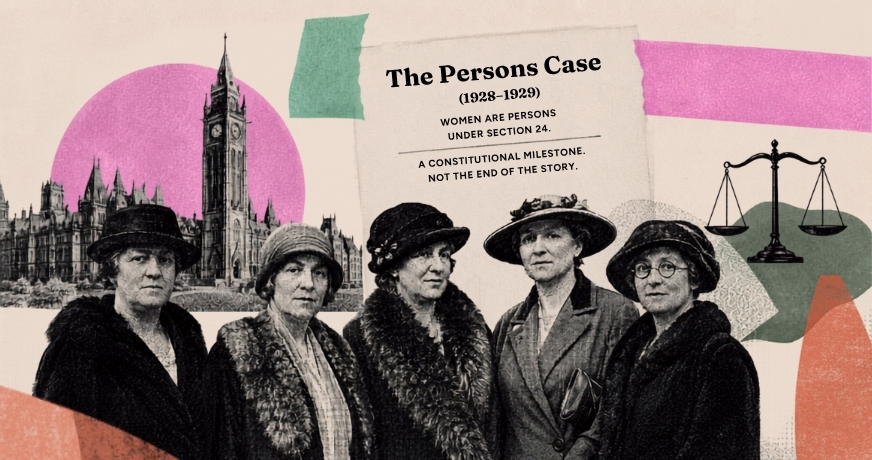
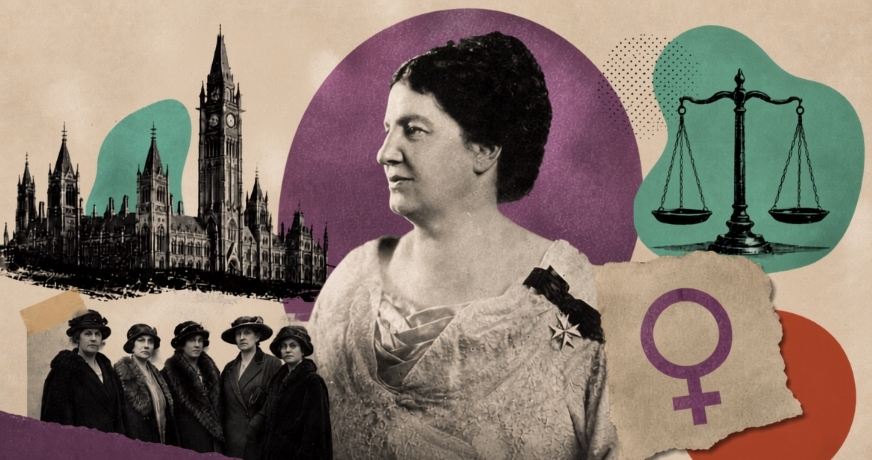
Women’s rights alone tell that story clearly enough. Recognition expands. Recognition contracts. Systems evolve. Power reshapes itself. Entire categories of humanity shift depending on the historical moment and who is allowed to define personhood.
Now we find ourselves entering an era where people increasingly anthropomorphize machines while simultaneously struggling to feel fully human themselves.
That feels important.
Not because I think technology is replacing humanity. But because our conversations about AI seem to reveal something about us. About longing. About cognition. About emotional connection. About loneliness. About what qualities we believe make a being “real.”
Why This Project Exists
I don’t fully know where those questions lead yet.
I suspect that uncertainty is part of why this project exists.
Said Quietly began as a place to think out loud about the strange intersection between technology, humanity, history, identity, systems, and modern life. A place for observations that feel too human for traditional “thought leadership,” but too important to leave unspoken.
Part archive.
Part field notes from the middle of an enormous societal transition.
Part attempt to remind one another that none of us are navigating this moment alone.
Because I don’t think people are imagining it.
Something is changing.
And I think many of us can feel it.
Key takeaways
- Technology carries human baggage.
- People do not interact with systems as blank slates. They arrive tired, hopeful, grieving, distracted, uncertain, and deeply human.
- Something feels different because something is different.
- Post-Covid life, AI acceleration, and digital saturation have changed how people think, work, connect, and cope.
- This project is really about personhood.
- Technology may be the setting, but the bigger question is what it means to be human during a moment of rapid change.