History
Emily Murphy: The Woman Who Opened the Door — and Those Left Outside It
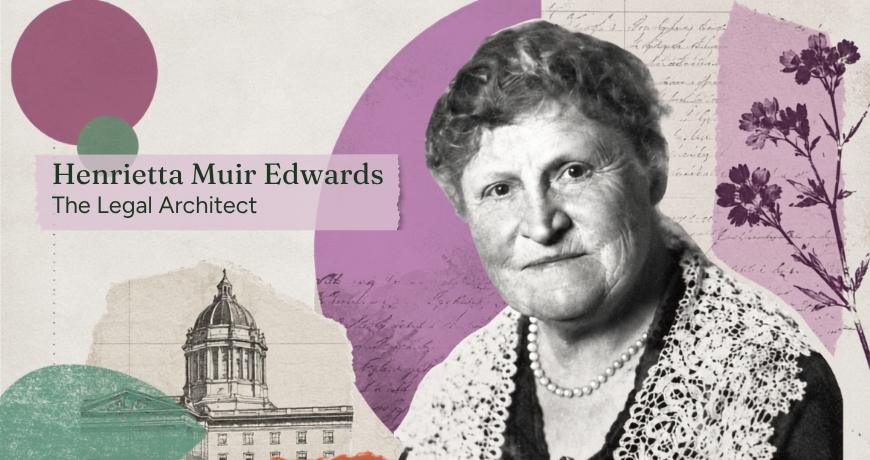
Emily Murphy helped change Canadian history by challenging a legal system that didn't consider women to be "persons"—but how do we reconcile that achievement with the harmful beliefs she also championed? What happens when a historical hero opens the door for some people while helping keep others outside?

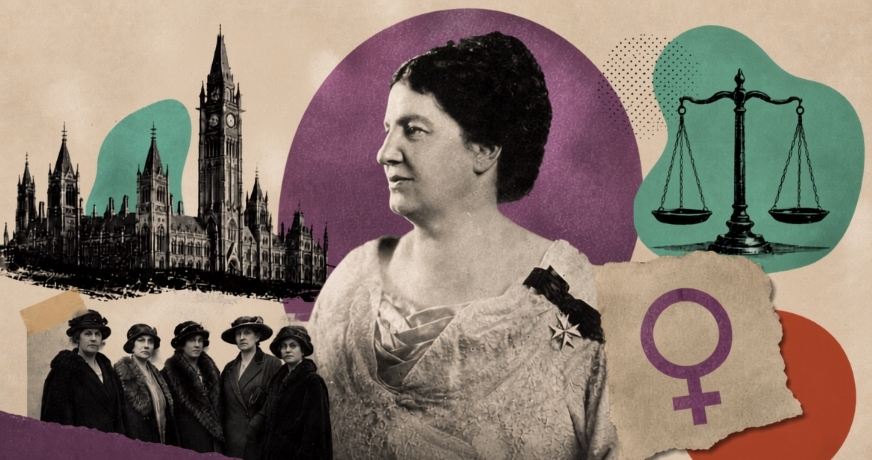
History loves a clean hero.
A determined woman.
A bad law.
A righteous fight.
A triumphant ending.
Cue swelling orchestral music.Unfortunately, history is almost never that tidy.
Emily Murphy is often remembered as the woman who helped change Canadian history by challenging the legal definition of personhood itself. Which she did.
She was also a vocal supporter of eugenics. Which she also absolutely was. Welcome to history, where people are rarely one thing. And where progress sometimes arrives carrying some deeply alarming baggage.
UX Law memo:
Occam’s Razor
“The simplest solution is often best.”
Connection:
Public memory loves the simplified story: Emily Murphy fought for women’s rights. Women became persons. The end.
Simple? Yes. Complete? Absolutely not.
Parallel Takeaway:
Simple narratives are easy to remember—but history rarely behaves that cleanly.
Before the Courtroom
Before Emily Murphy became a constitutional headline, she was already a public figure.
Born in Ontario in 1868, Murphy grew up in a politically connected family at a time when women’s roles were expected to be tidy, domestic, and firmly adjacent to power rather than inside it. She did not particularly accept that arrangement.
She became a writer, activist, and advocate for women’s legal and social reform. Much of her work focused on issues affecting women and children, particularly property rights, maternal protections, and access to safer social conditions.
She was part of the broader first-wave feminist movement in Canada—a movement that fought for meaningful rights and reforms for women.
Which sounds straightforward.
It was not.
Because like many reform movements of the era, progress often came bundled with deeply paternalistic ideas about morality, class, and who deserved protection in the first place.
History’s gift basket is weird like that.
Reformer, Rule-Changer, and Product of Her Time
Murphy was not a political outsider shouting from the margins. She worked within systems of power. And, in many cases, believed those systems should be improved rather than fundamentally dismantled. She advocated for women’s participation in public life, yes. But her vision of progress was shaped by the assumptions of her social class, race, and era.
That matters.
Because it helps explain how someone could genuinely fight for women’s advancement while also supporting policies that denied bodily autonomy and dignity to others. Emily Murphy was not an accidental contradiction. She was, in many ways, a very recognizable kind of reformer: someone determined to expand rights—but only within the boundaries of who they believed counted.
The Woman Who Was Told to Leave
Let’s move on to Edmonton, 1916. Emily Murphy became the first female magistrate in the British Empire. That’s objectively a big deal.
At the time, women in Canada were still navigating a legal and political system designed almost entirely by men, for men, with all the subtlety of a locked oak door and a sign reading Absolutely Not.
Murphy’s appointment to Edmonton’s police court was groundbreaking. Women and girls appearing before the courts often faced deeply unfair treatment, particularly in cases involving morality laws, exploitation, or assault. The idea was that a woman magistrate might bring greater understanding to those cases.
Reasonable enough.
Then a lawyer challenged her authority. Not because she lacked qualifications. Not because she had made some catastrophic judicial error.
No. Because she was a woman.
The legal argument was that women were not legally considered “persons” under the British North America Act (the constitutional framework governing Canada at the time).
Which is one of those sentences that sounds fake until you realize history genuinely said things like this out loud. If women weren’t “persons,” the argument went, Murphy couldn’t legally hold public office. A truly spectacular example of bureaucracy weaponized as misogyny.
Murphy reportedly responded with appropriate fury. And honestly? Fair.
UX Law memo:
Tesler’s Law
“Every system has an inherent amount of complexity that cannot be removed.”
Connection:
The legal and social question of personhood is complicated. Instead of engaging with that complexity, institutions simplified it into: “Persons = men.”
That didn’t remove complexity. It just pushed the consequences onto women.
Parallel Takeaway:
Rather than confronting the complexity of evolving rights, the system simplified the issue by excluding women altogether.
The Question That Should Not Have Needed Asking
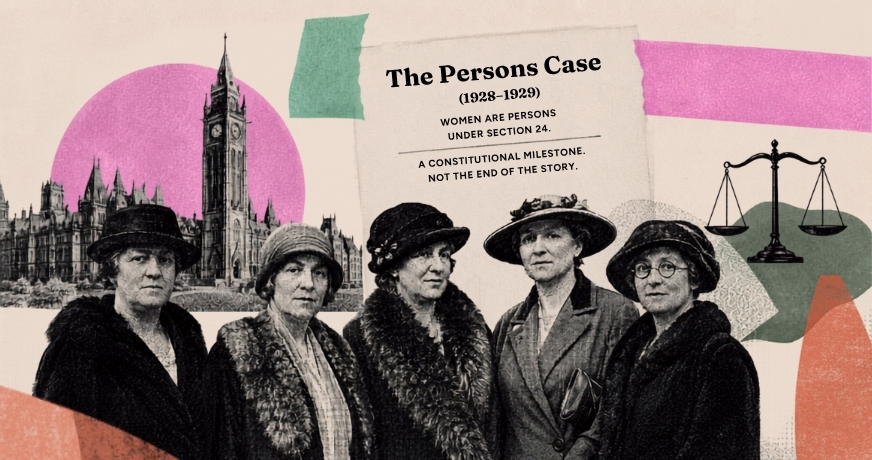
Years later, Murphy joined forces with four other women:
Together, they became known as The Famous Five.
In 1927, they formally petitioned the Supreme Court of Canada with what became known as the Persons Case. The question:
Does the word “persons” in Section 24 of the British North America Act include women?
That this required legal clarification remains one of history’s more embarrassing administrative moments. In 1928, the Supreme Court said no. Because of course it did. Their reasoning leaned heavily on historical interpretations that assumed constitutional language naturally referred to men unless explicitly stated otherwise. Which is a neat trick if you enjoy preserving exclusion through grammar.
But the Famous Five appealed. And in 1929, the case went to Britain’s Judicial Committee of the Privy Council, which was then Canada’s highest court of appeal.
On October 18, 1929, the Privy Council overturned the decision and women were legally recognized as “persons” under Section 24. Meaning women could be appointed to the Senate. A major constitutional victory. But also a sobering reminder that the fight was simply to be recognized as full legal persons in the first place. Progress, yes. An absurd starting point, also yes.
UX Law memo:
Jakob’s Law
“Users spend most of their time using other systems, so they expect your system to work the same way.”
Connection:
The courts’ interpretation of “persons” followed historical precedent because that was the familiar system behavior.
When Emily Murphy’s authority as magistrate was challenged, the resistance wasn’t because the law explicitly said women couldn’t serve—it was because the legal system had always functioned as though political and judicial power belonged to men.
Parallel Takeaway:
The legal system behaved much like users relying on familiar patterns: if “persons” had historically meant men, the assumption persisted—even when the system itself was evolving.
The Problem With Hero Narratives
Now here’s where the story becomes considerably more complicated. Because yes, Emily Murphy helped open a critical legal door. But not for everyone.
Murphy held openly racist and classist views. She supported the eugenics movement—a deeply harmful ideology rooted in the belief that society could be “improved” by controlling who should be allowed to reproduce.
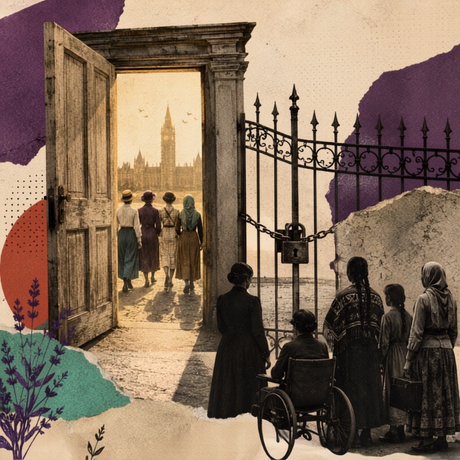
That included support for forced sterilization policies.
Policies that disproportionately harmed:
- Indigenous women
- disabled people
- poor women
- institutionalized people
- immigrants
- racialized communities
So while Murphy fought for women’s legal recognition, her vision of which women deserved dignity was profoundly limited. That contradiction matters. A lot. Because if our version of empowerment only includes people who look like us, live like us, or meet our standards of “worthiness,” then it isn’t liberation. It’s gatekeeping with better branding.
UX Law memo:
Peak-End Rule
“People judge an experience largely based on how they felt at its peak and at its end.”
Connection:
The Persons Case gets remembered as a triumphant ending.
Women became legally recognized as persons. Victory. Progress. Insert commemorative plaque.
But that neat ending can overshadow the full experience: exclusion beforehand, marginalized women still excluded, Murphy’s own harmful beliefs.
Parallel Takeaway:
History often remembers the emotional high point—the legal victory—while smoothing over the messier realities that came before and after.
Progress Can Be Real and Still Incomplete
This is the uncomfortable part some historical storytelling likes to politely sidestep. People can accomplish meaningful things while also causing real harm. Acknowledging Murphy’s role in constitutional history does not require pretending her beliefs were harmless. And critiquing those beliefs does not erase the legal importance of the Persons Case. Both things can be true. History is rude that way.
The bigger lesson may be this:
Progress is not a neat upward staircase.
It’s messy.
Contradictory.
Often built by imperfect people operating within systems they only partially challenged.
Emily Murphy helped force Canada to legally recognize women as persons. But the fight over whose humanity gets fully recognized? That did not end in 1929. Frankly, some days it still feels aggressively ongoing.
Final Thought
The Persons Case matters. Emily Murphy matters. So do the people excluded from her vision of progress. If we only tell clean stories about history, we risk repeating its blind spots. And if personhood has taught us anything, it’s that recognition is rarely distributed fairly the first time around. Or the second. Sometimes not even the tenth.
This Story Gets Messier
This blog is part of a larger series.
In the coming posts, we’ll be digging deeper into:
- What “personhood” even means now, in an era of AI, algorithms, automation, and digital systems making decisions about humans
- The other members of the Famous Five (including the complicated parts)
- The women and communities missing from mainstream Persons Day narratives
- How legal personhood evolved beyond the Persons Case
- Women in workplaces, leadership, and public life after 1929