History
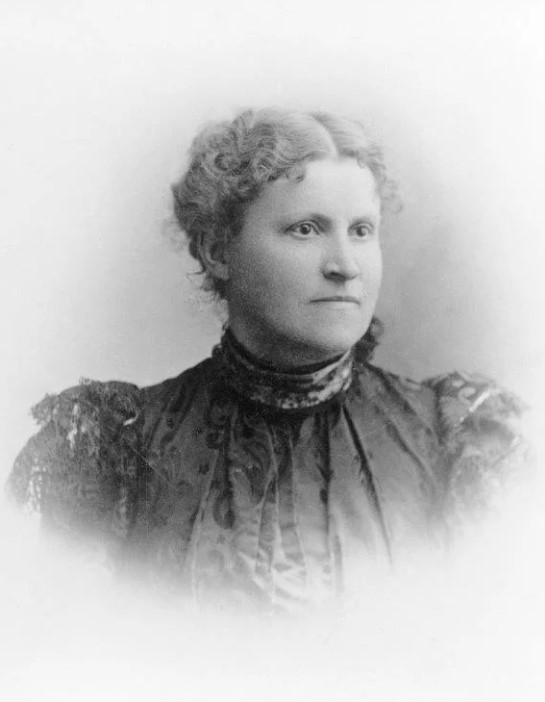
Henrietta Muir Edwards: The Legal Architect Nobody Talks About
Before constitutional victories and historic court cases, there was a woman quietly documenting the ways the law failed women. How much change begins not with protest, but with understanding how the system actually works?

History tends to remember the loud ones. The fiery speakers. The headline-makers. The people whose names fit neatly onto commemorative plaques.
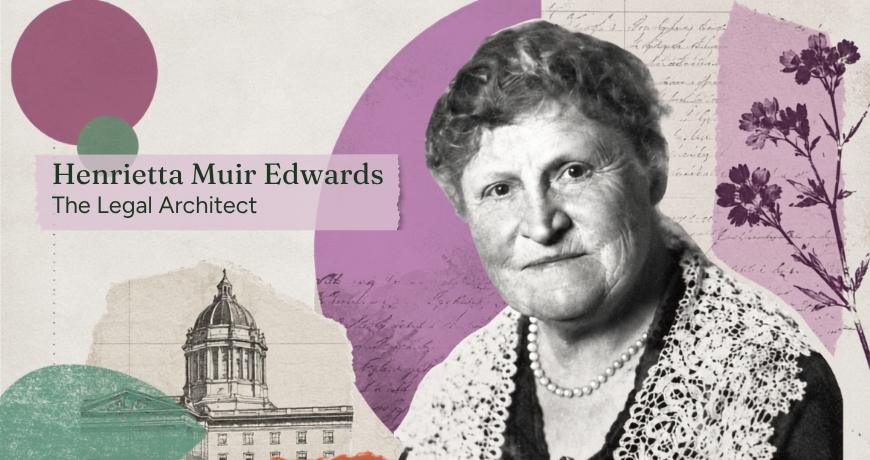
And then there’s Henrietta Muir Edwards. Who was less “stand on a stage and rattle Parliament” and more “quietly become terrifyingly knowledgeable about the law until systems can no longer ignore you.” A different flavour of formidable.
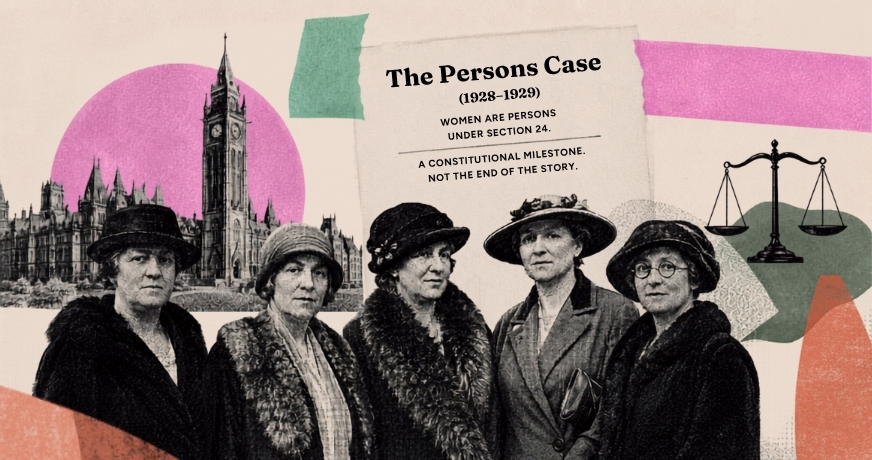
If you know her name at all, it’s probably because she was one of the Famous Five—the group of women behind the Persons Case that helped establish women as legally recognized “persons” under Canadian law in 1929.
But Henrietta’s story started long before that ruling. And if the others brought momentum, public pressure, and political theatre…Henrietta brought receipts.
Before “Persons,” There Was Paperwork
Henrietta Louise Muir Edwards was born in 1849 in Montreal.
Which means she entered the world at a time when women had extremely limited legal rights, limited property protections, limited political participation, and very few formal mechanisms to challenge any of it. Fun.
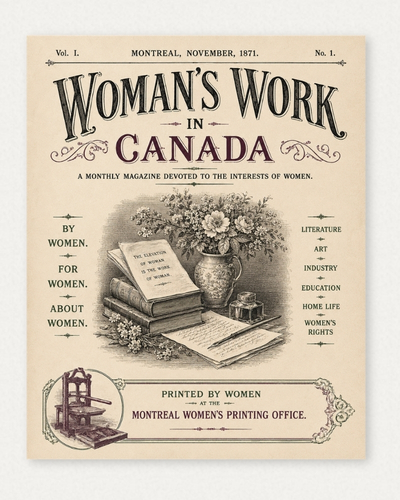
Instead of accepting that as background scenery, Henrietta started paying attention. Dangerous habit. As a young woman, she and her sister Amelia helped publish Woman’s Work in Canada , one of the first publications in the country focused specifically on women’s employment conditions.
Not society gossip. Not decorative homemaking advice. Work. Wages. Rights. Working conditions. A suspicious amount of practical feminism for the 1870s.
Which makes this particularly notable because most of society was still deeply committed to the idea that women’s professional ambitions should begin and end somewhere near “being helpful.”
The Woman Who Read the Fine Print
Henrietta developed a serious interest in law. Not because she was allowed to practice it, because she wasn’t. But because legal systems shape what people are allowed to do. And once you realize that, it becomes very difficult to unsee.
She became widely known for her research into women’s legal and property rights. Eventually publishing Legal Status of Women in Alberta, a practical legal reference used by activists, lawmakers, and reformers.
Which is perhaps the least flashy possible route to influence. And also one of the most effective. Imagine being the person everyone consults because you actually read the legislation. No wonder systems get nervous.
Before constitutional victories and historic court cases, there was a woman quietly documenting the ways the law failed women. How much change begins not with protest, but with understanding how the system actually works?
Before constitutional victories and historic court cases, there was a woman quietly documenting the ways the law failed women. How much change begins not with protest, but with understanding how the system actually works?
UX law memo:
Tesler’s Law
Every application or system has an inherent amount of complexity that cannot be eliminated—only transferred.
The Connection
Canadian legal systems were already complex. That complexity existed whether women understood it or not. Henrietta spent decades researching and documenting legal rights so ordinary women didn’t have to decipher legislation on their own.
Parallel Takeaway
Good design doesn’t remove complexity; it prevents users from carrying all of it themselves. Henrietta’s legal guides served much the same purpose as modern UX documentation, service design, and user support systems—making complicated structures easier to navigate.
Enter: The Famous Five
By the 1920s, Henrietta was in her seventies. Most people would reasonably be considering quieter hobbies. Birdwatching. Needlepoint. Aggressively judging neighbours from the porch.
Henrietta instead joined Emily Murphy, Nellie McClung, Louise McKinney, and Irene Parlby in asking a constitutional question: Were women legally “qualified persons” under Section 24 of the British North America Act? The Supreme Court of Canada initially said no. Because apparently legal systems occasionally need explicit clarification that half the population counts.
The Privy Council overturned that decision in 1929. Women became legally recognized as persons for Senate appointment purposes.
A historic decision. A shockingly modest ask.
““The rejoicing all through Canada was not so much that it opened the door of the Canadian Senate to women, as it was that it recognized the personal entity of women, her separate individuality as a person.””
Let’s Examine the Fine Print
Because history is, as always, not tidy, Henrietta Muir Edwards advocated strongly for women’s legal rights. She helped build legal literacy for women in Canada. She contributed to structural change.
And.
Like other reformers of her era, her advocacy existed within the social and political assumptions of her era—assumptions shaped by class privilege, colonial institutions, and narrow ideas about who reform was meant to serve. The gains being fought for were largely focused on white women within existing colonial institutions. Indigenous women were not meaningfully included in these legal victories. Many racialized women remained excluded from full political participation, legal recognition, and equitable treatment.
So while the Persons Case mattered enormously…It did not magically produce universal justice.
UX law memo:
Jakob’s Law
Users spend most of their time using other systems and therefore expect similar systems to work in familiar ways.
The Connection
For generations, exclusion of women from political and legal power had become normalized because it was familiar. Many people accepted these barriers not because they were fair, but because they were longstanding.
Parallel Takeaway
Familiarity is not the same thing as correctness. Designers—and societies—must occasionally question whether the systems people have become accustomed to are actually serving everyone fairly.
Why Henrietta Matters in UX (Yes, Really)
Henrietta understood something UX people know instinctively: Systems are made of rules.
Interfaces are just prettier paperwork. If the rules exclude people, the experience excludes people. Doesn’t matter how elegant the design is. Her work was fundamentally about making invisible structures visible. Documenting confusing systems. Translating legal complexity into usable information. Helping people understand what a system allowed—or denied.
Which feels suspiciously adjacent to information architecture, accessibility, and service design. Not saying Henrietta Muir Edwards was an accidental UX strategist. But I am raising an eyebrow. A respectful one.
Accessibility Heuristic
Information that cannot be accessed or understood might as well not exist.
The Connection
Legal rights only matter if people know they have them. Henrietta’s work focused on translating legal information into something women could actually use and act upon.
Parallel Takeaway
Whether it’s a government service, healthcare portal, or legal system, access begins with understanding. Clarity is not a bonus feature; it’s a prerequisite for participation.
Final Thought
Henrietta Muir Edwards was not the loudest figure in Canadian reform history. But she was one of the people doing the structural work underneath the headlines.
Research. Documentation. Legal interpretation. System literacy.
The unglamorous machinery of change. Sometimes history celebrates the person giving the speech. Sometimes the more interesting story is the one about the person who quietly read the rules, realized they were broken, and started annotating the margins.
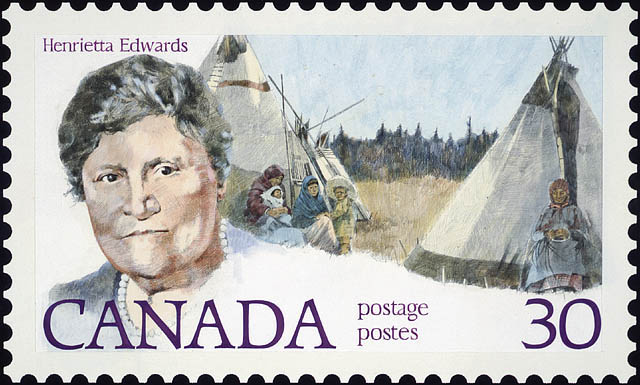
Library and Archives Canada/2265933
Issued on March 4, 1981
Part of a Larger Series
This blog is part of a broader series exploring women, personhood, systems, and modern life. Because the Famous Five are not a tidy heritage-moment anecdote.
They’re a doorway.
We’ll keep digging into:
- Emily Murphy’s contradictions
- Nellie McClung’s legacy
- the women left out of mainstream Canadian feminist history
- Indigenous women and delayed political recognition
- women in workplaces and leadership
- systems that quietly shape belonging
- what “personhood” means in the age of AI and algorithmic decision-making
Because apparently “who counts as fully human?” remains a disturbingly durable question.