History
Louise McKinney: The Woman Who Entered Politics Before Canada Was Ready for Women to Be There
What happens when a political system is built around the assumption that only certain people belong? Louise McKinney, one of Canada's Famous Five and one of the first women elected to a legislature in the British Empire, helped challenge those assumptions through women's suffrage, political reform, and the fight for legal recognition in the Persons Case.

There’s something deeply funny about how history describes “first women.”
First woman elected. First woman appointed. First woman admitted. First woman recognized. As though society accidentally discovered women had been standing there the whole time. Like a raccoon opening a garbage can and suddenly uncovering half the political system. “Oh wow. Apparently women can do government.”
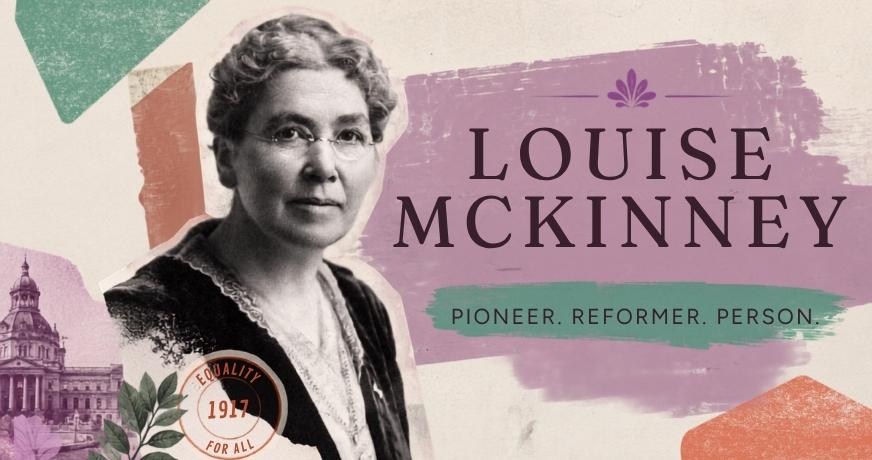
In Louise McKinney’s case, the historical milestone attached to her name is this: She became one of the first women elected to a legislature in the British Empire in 1917. Which is huge. And also a pretty staggering indication of how late women were allowed into formal political systems.
Because women had already been organizing communities, managing farms, running households, leading reform movements, fundraising, educating children, and quietly holding entire social structures together for generations.
But government? Apparently that was still considered advanced-level civilization content. So let’s talk about Louise McKinney. Because like the rest of the Famous Five, her story is important. Complicated. Historically significant. And not nearly as tidy as commemorative plaques would prefer.
Who Was Louise McKinney?
Louise McKinney was born in Ontario in 1868 and later moved west to what would become Alberta. Which carries significance because western Canada at the time was politically experimental in ways eastern Canada often wasn’t.
The Prairies were growing rapidly. Communities were being built in real time. Political structures were newer. Social reform movements had influence. And women’s organizations became deeply involved in shaping public life.
Louise McKinney emerged through that reform culture. Particularly through the temperance movement. And yes. This is the point where modern readers usually go: “Wait. Alcohol prohibition?” Correct.
Many women’s political movements of the era were closely tied to temperance activism because alcohol abuse was often linked to domestic violence, poverty, abandonment, and financial instability within households.
Which means the movement wasn’t simply about people angrily confiscating fun at barn dances. It was also tied to real social harms women were experiencing with very little legal or financial protection.
At the same time, temperance movements often carried strong moralism, social conservatism, and deeply paternalistic ideas about how society should function. So immediately, we arrive at the recurring historical problem: Someone can fight for meaningful progress… while also carrying beliefs we now recognize as restrictive or exclusionary.
History refuses to stay in neat categories. Very inconvenient of it, honestly.
The Election That Changed Things
In 1917, Louise McKinney was elected to the Alberta Legislature.
Not appointed. Not given an honorary position. Not invited to participate on the sidelines. Elected. By actual voters.
That distinction matters because it represented something far larger than a personal achievement. It was public proof that women could successfully compete in a political system that had been designed without them in mind.
Today, it’s easy to look at an election victory and think, “Of course she won. Why wouldn’t she?”
But at the time, the very idea of women holding elected office was still controversial in many parts of the world.
Women had only recently gained the right to vote in Alberta. Many people still believed politics was too demanding, too combative, or simply too important for women to participate in directly. Others argued that women belonged in the moral and social sphere of society but not in government itself.
McKinney’s election challenged those assumptions in the most public way possible.
Not through speeches. Not through petitions. Not through theoretical arguments. Through victory.
The electorate had been given a choice, and they chose a woman.
That made international headlines because it challenged a deeply embedded assumption: that politics was fundamentally male territory.
And this is where the historical brain goblin starts kicking the furniture again.
Because the reaction to women entering politics often wasn’t:
“Women are incapable.”
It was:
“This system was designed with the assumption they would never be here.”
Different problem. Same exclusion.
Women entering legislatures forced political institutions to confront something uncomfortable:
If women could vote…
campaign…
debate legislation…
represent citizens…
and govern effectively…
then the old logic holding them outside the system started collapsing in public.
UX Law Memo:
Jacob’s Law
“Users spend most of their time on other sites, and expect similar patterns.”
Connection:
Politics had been designed around male participation for generations.
So when women entered those spaces, institutions treated them like exceptions instead of expected participants
Parallel takeaway:
A website designed only around desktop workflows because the organization unconsciously assumes “real users” are sitting at office computers.
The exclusion is embedded in the assumption itself.
The Persons Case
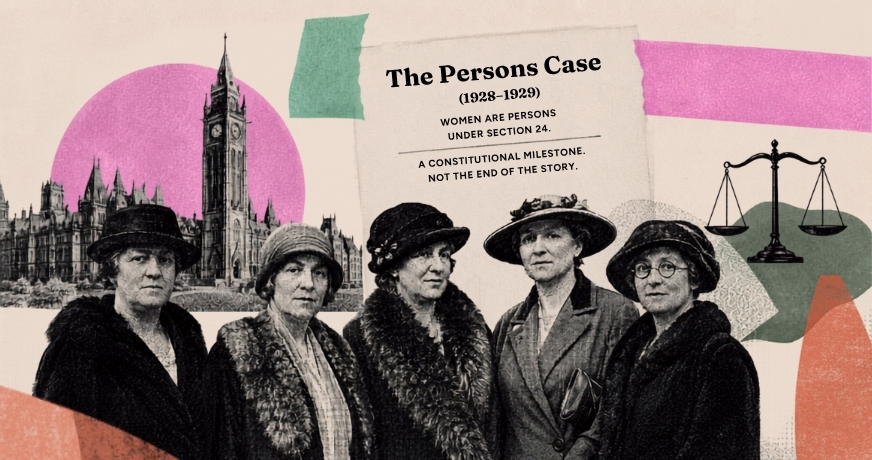
Louise McKinney later became one of the Famous Five: the group of women who challenged the legal interpretation of the word “persons” under Canadian law.
Because yes. Canada once had to legally clarify whether women counted as persons for Senate appointments.
The 1929 Persons Case established that women were legally considered “qualified persons” eligible for appointment to the Senate of Canada.
Which feels obvious now. But obviousness has a terrible historical track record.
Many systems only become “obviously unfair” after people spend decades exhausting themselves fighting them.
And one reason this case matters so much is because it exposed how exclusion often hides inside language that appears neutral.
“Persons.” Sounds universal.
Until you discover the system quietly meant “men.”
Funny how often that happens.
UX Law Memo:
The Exclusion Principle
“Designing for one group can unintentionally exclude another.”
Connection:
Early women’s political movements opened doors for some women while many others remained marginalized or unheard.
Progress happened.
But unevenly.
Parallel takeaway:
An app that technically meets accessibility guidelines but still assumes high literacy, strong internet access, or cultural familiarity with certain workflows.
Inclusion is rarely as complete as organizations think it is.
The Complicated Parts
Now comes the section where history stops posing politely for photographs.
Because Louise McKinney, like several members of the Famous Five, held views shaped by the reform politics of her era. Including support for some forms of social purity movements and moral regulation that modern audiences may find deeply uncomfortable.
And this matters.
Not because history should become a purity contest where every historical figure must align perfectly with modern values before they can be discussed.
But because flattening people into flawless heroes prevents us from understanding how systems actually evolve.
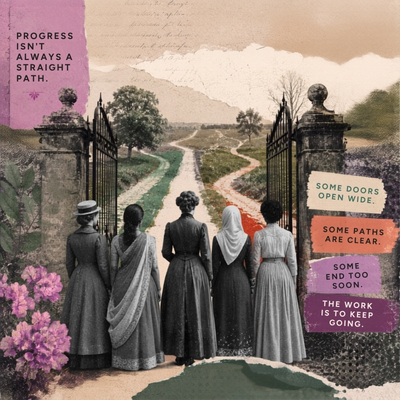
Progress is rarely delivered by perfect people.
More often, it arrives through deeply imperfect humans pushing one boundary while failing to recognize another.
That does not erase harm. But it does complicate the narrative.
Which is honestly where the learning usually lives.
UX Law Memo:
Aesthetic-Usability Effect
“People often perceive polished systems as more trustworthy.”
Connection:
Historical storytelling does this constantly.
Statues. Heritage plaques. Compressed timelines. Clean biographies.
They create the feeling of clarity.
But real history is messy. Contradictory. Human.
Parallel takeaway:
A beautifully designed interface that hides confusing policies, broken workflows, or exclusionary assumptions underneath.
Good presentation can make people trust incomplete systems.
Why Louise McKinney Still Matters
Because political systems do not magically become inclusive on their own.
People force them to change.
Usually while being told they are:
- too emotional
- too disruptive
- too radical
- too unrealistic
- too loud
- too ambitious
- or somehow simultaneously too weak and too threatening at the exact same time.
Louise McKinney helped crack open political participation for women in Canada.
That mattered.
Even though the work was incomplete. Even though many women remained excluded. Even though Indigenous women, racialized women, and marginalized communities continued facing enormous barriers long afterward.
The story is not:
“And then equality was achieved forever.”
The story is: systems changed slowly, unevenly, and often only after sustained pressure made exclusion impossible to ignore.
Which feels… extremely familiar.
UX Law Memo:
Tesler’s Law
“For any system there is a certain amount of complexity which cannot be reduced.”
Connection:
The Persons Case did not magically resolve gender equality.
It moved the complexity forward into new questions:
- Who defines participation?
- Who gets representation?
- Who gets heard?
- Who still gets excluded?
Parallel takeaway:
Simplifying onboarding while pushing all the confusion into account recovery and customer support later.
Systems often relocate friction instead of removing it.
This Blog Is Part of a Larger Series
Because the Famous Five are not a neat inspirational poster. They are a doorway into larger conversations about power, systems, inclusion, and who gets recognized as fully participating in society.
We’ll keep digging into:
- the individual women behind the movement
- the contradictions within reform politics
- the communities left out of mainstream historical narratives
- women in workplaces and public systems
- personhood in digital spaces
- how modern technology still reflects hidden assumptions about who belongs