History
Persons Day: The Day Canada Had to Officially Admit Women Were, In Fact, People
Women became “persons” under Canadian law in 1929. The ruling mattered enormously, but personhood, belonging, and equality turned out to be far more complicated than a courtroom victory.

Some historical milestones begin with ceremony and carefully rehearsed speeches. Others begin when a group of women quietly decides they’ve had enough of institutional nonsense.
Persons Day falls firmly into category two.
Every October 18 in Canada, Persons Day marks the anniversary of the 1929 Judicial Committee of the Privy Council decision that recognized women as “qualified persons” under Canadian law.
Which is a sentence that feels both deeply important and also absolutely bananas to have to write. Because yes. There was, in fact, a legal moment in Canadian history where the question of whether women counted as “persons” had to be formally argued.
Not metaphorically.
Legally. Welcome to history.
So… what is Persons Day?
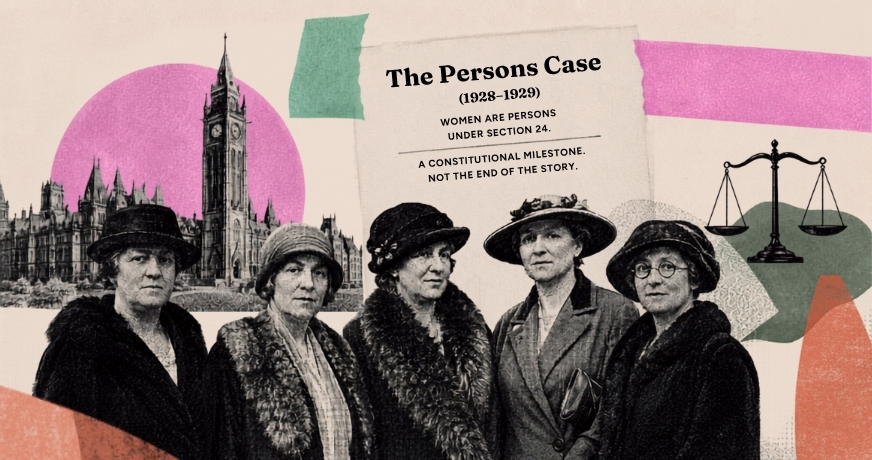
Persons Day commemorates the 1929 ruling in the Edwards v. Canada (Attorney General) case, better known as the Persons Case.
The ruling established that women were legally considered “persons” under Section 24 of the British North America Act, 1867 (now the Canadian Constitution Act, 1867), which meant they could be appointed to the Senate of Canada.
That was the immediate legal issue.
Not voting.
Not employment rights.
Not full equality.
Specifically: Could women be appointed to the Senate?
Which feels weirdly specific until you realize history often changes because of oddly specific loopholes.
The short answer? Canada initially said no. The longer answer is… significantly more annoying.
So in 1929, Canada officially recognized women as “persons” under the law. Which is one of those historical facts that lands somewhere between important constitutional milestone and excuse me, what?
Because yes. There was a moment in Canadian history when whether women legally counted as “persons” had to be argued all the way to Britain’s highest court. And yes, that sounds absurd now. But also? That absurdity tells us something useful.
Because the Persons Case is often remembered as a neat victory story. A triumphant legal milestone where justice prevailed, progress marched forward, and everyone learned an uplifting lesson.
History would love that. History is also messy. The Persons Case mattered enormously, but it did not magically create equality.
And personhood, as it turns out, has always been more complicated than one legal ruling.
The world leading up to Persons Day was not exactly thriving in equality
To understand why this mattered, we need to briefly visit early 20th-century Canada. Bring snacks.
Women’s lives were heavily constrained by law, culture, and expectation. Depending on class, race, marital status, and geography, women’s options were often limited to some combination of:
- marriage
- caregiving
- domestic labour
- teaching (sometimes, until marriage)
- nursing (if respectable enough)
- unpaid family work
- politely existing without too many opinions
Women absolutely worked. Constantly.
But legal rights and social power are not the same thing.
By the late 1800s and early 1900s, women across Canada were organizing around suffrage, labour rights, education, property rights, and public participation. The suffrage movement had momentum. Women gained the federal right to vote in 1918. (Important asterisk incoming.) Because that progress was not universal.
Many Indigenous women, racialized women, and other marginalized communities remained excluded from meaningful political participation for much longer. History loves announcing “victory” while quietly leaving people outside the room.
So while the early 20th century was undeniably a period of change, it was also deeply unequal.
Persons Day emerged from that tension.
The question that started it all
The legal issue centered around Section 24 of the British North America Act, 1867 (now the Constitution Act, 1867), which stated that “qualified persons” could be appointed to the Canadian Senate.
Seems straightforward. Unless, apparently, you are a woman in early 20th-century Canada. In 1927, five Alberta women petitioned the federal government with a deceptively simple question:
Did the word “persons” include women?
The Supreme Court of Canada answered in 1928: No. Not Cool.
Its reasoning leaned heavily on historical assumptions: when the law was written in 1867, women were not part of political life in the same way men were, so the term “persons” was interpreted accordingly. Which is a very efficient way to preserve inequality forever, if you think about it.
Fortunately, the case didn’t end there. The women appealed to the Judicial Committee of the Privy Council in Britain, then Canada’s highest court of appeal.
On October 18, 1929, the Privy Council overturned the Supreme Court decision. Women were legally recognized as “persons” under Section 24. Which meant women could be appointed to the Senate. A constitutional milestone. Also an astonishingly low bar.
Women still couldn’t access equality in any meaningful universal sense. Indigenous women remained excluded from full political participation for decades. Racial inequities were firmly intact. Economic dependence, workplace discrimination, and rigid social expectations continued to shape women’s lives. Legal recognition had shifted. Society, considerably less so.
Mind-bending fact; Lord Sankey (the British judge who led the 1929 Privy Council decision) famously stated:
“The British North America Act planted in Canada a living tree capable of growth and expansion within its natural limits.”
This became one of the foundational principles of Canadian constitutional interpretation. And it still shapes Canadian constitutional law today.
UX Law Memo:
Jacob’s Law
“Users spend most of their time on other sites, and expect similar patterns.”
Connection:
The Supreme Court’s 1928 ruling. The court effectively said:
Women have historically not occupied these roles.
Therefore users (society) expect the system to work that way. Therefore the system should continue working that way.
This is a dark little mirror of Jacob’s Law. People become accustomed to systems behaving a certain way—even when those systems are exclusionary. Historical assumption became interface expectation.
Parallel takeaway:
Familiar systems are not inherently fair systems.
Enter the Famous Five
Now we meet the women most commonly associated with the Persons Case.
Collectively known as the Famous Five:
Emily Murphy
- Canada’s first female magistrate in 1916.
Nellie McClung
- a writer, activist, and prominent suffrage campaigner known for her sharp wit and political organizing.
Irene Parlby
- a political leader and advocate for rural women.
Louise McKinney
- one of the first women elected to a legislature in the British Empire.
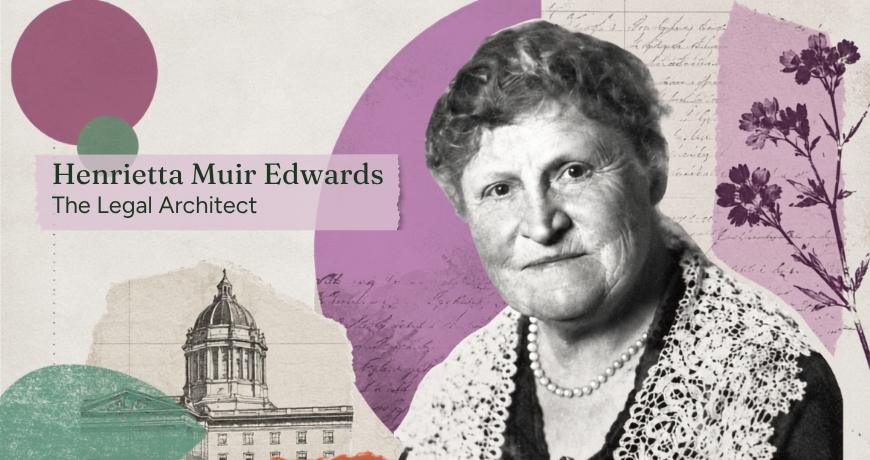
Henrietta Muir Edwards
- worked extensively in women’s legal advocacy.
These women were activists, reformers, writers, and political advocates. They pushed hard against systems designed to exclude women from public life. And they were effective.
Emily Murphy, in particular, became central to the legal challenge. In 1916, she became the first female magistrate in Canada. Which sounds groundbreaking… because it was.
Until a lawyer challenged her authority by arguing that women were not legally “persons” under the law. Which is an impressively bold level of nonsense. Murphy continued serving, but the larger legal ambiguity remained. And eventually, that ambiguity became the battleground.
What changed?
Immediately? Women became eligible for appointment to the Senate. In 1930, Cairine Wilson became Canada’s first female senator. That mattered symbolically and politically.
But Persons Day was never the magical moment where equality suddenly arrived and everyone high-fived into the sunset. Legal recognition is not the same as universal justice. Many barriers remained. Many barriers still remain.
And some of the Famous Five themselves held views that are deeply troubling today, particularly around race, class, and eugenics.
History gets messier the closer you look. Which is exactly why it deserves close looking.
What it didn’t solve
This is where commemorative history sometimes gets a little selective. Because while the Persons Case expanded legal recognition for some women, it did not deliver universal equality.
Not remotely.
Indigenous women
- Indigenous women remained excluded from many rights and protections long after 1929. The legal and political systems that recognized certain women as “persons” were simultaneously participating in colonial systems that stripped Indigenous communities of autonomy, imposed discriminatory policies, and restricted civic participation.
- For many Indigenous women, legal recognition in one constitutional context did not translate into actual justice. Not even close.
Racial inequities
- Racialized women also continued facing systemic exclusion. Access to education, employment, political participation, and institutional power remained profoundly unequal.
- A legal ruling about Senate eligibility did not dismantle racism. Shocking, I know.
Economic inequality
- Legal personhood does not pay wages. It does not create childcare. It does not fix exploitative labour conditions. It does not redistribute access to opportunity.
- Many women in 1929 were still navigating poverty, economic dependence, and limited professional pathways. Especially working-class women. Especially marginalized women.
Social expectations
- And then there was culture. Because even when laws shift, expectations often lag behind. Women were still expected to prioritize domestic roles, caregiving, respectability, and social compliance.
- Public leadership was still viewed with suspicion. Professional ambition was often treated as deeply inconvenient. Legal inclusion does not instantly rewrite social norms. Humans are annoyingly slow at that.
UX Law Memo:
Tesler’s Law
“Every application has inherent complexity that cannot be removed.”
Connection:
The Persons Case itself.
The easy narrative: “Women became persons. Yay progress.”
The real narrative: Colonial systems, Indigenous exclusion, racial inequities, class barriers, eugenics, legal ambiguity, institutional resistance. The complexity didn’t disappear. Simplified storytelling just hides it.
Which is EXACTLY Tesler. Complexity exists somewhere. Either you acknowledge it…Or you dump it on someone else.
Parallel takeaway:
Simplified systems often offload complexity onto marginalized people.
Legal recognition is not the same as equality
This may be the most important part. The Persons Case matters because it shows institutions can change. It also matters because it reminds us how narrow institutional change can be. Being recognized in law is significant, but equality is larger than legal wording.
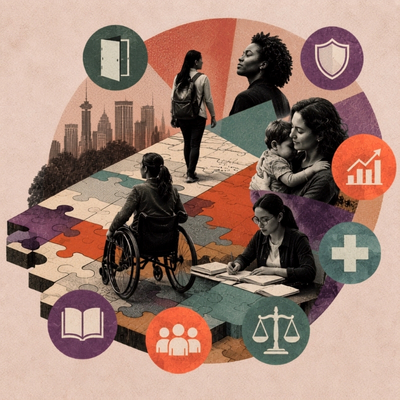
Equality lives in access.
Safety.
Economic opportunity.
Representation.
Healthcare.
Education.
Freedom from discrimination.
The ability to participate fully in society without constantly negotiating barriers someone else decided were reasonable.
The Persons Case moved one important piece. It did not finish the puzzle.
Heuristics Memo:
User Control and Freedom
Connection:
Women had no ability to meaningfully alter the system without extraordinary intervention.
The system had no undo button. No permissions change. No user settings. Just institutional lockout.
The Persons Case was essentially a forced redesign request.
Why Persons Day still matters
Because the questions underneath the case never fully disappeared.
- Who gets recognized?
- Who gets heard?
- Who gets protected by systems?
- Who gets treated as fully human in law, policy, technology, workplaces, and culture?
The specifics change. The architecture of exclusion often rhymes.
Persons Day is not just about celebrating a legal victory. It’s about examining how institutions define belonging. And how often those definitions arrive late. Very late.
For women in technology, design, leadership, policy, and public life, that conversation still feels uncomfortably current. Because while no one is filing court cases arguing women aren’t persons anymore—(we would hope)—systems still make assumptions about whose expertise matters, whose labour is visible, whose safety gets prioritized, and who must continually prove competence.
Different century. Fancier software. Some suspiciously familiar dynamics.
Notable Dates for Canadian women:
Before 1929
The Indian Act imposed deeply patriarchal rules on Indigenous women. For example, First Nations women could lose legal status if they married non-status men, while men did not face the same penalty. Many later equity struggles involved undoing these harms.
Some Canadian provinces began allowing certain women — usually property-owning widows or unmarried women — to vote municipally. Rights were highly restricted and inconsistent.
Manitoba became the first province to grant most women the provincial vote in 1916. Other provinces followed quickly.
In 1918, many women gained the right to vote federally in Canada. But this excluded many groups, especially Indigenous women, Asian Canadian women, and others facing racist restrictions.
Women became legally eligible to sit in the House of Commons.
Agnes Macphail became the first female Member of Parliament in Canada.
1929 – The Persons Case
The Persons Case ruled that women were legally “qualified persons” under the law and therefore eligible to be appointed to the Senate.
This is one of the most symbolically important moments in Canadian gender-equity history — though it’s also discussed critically today because some of the women involved held racist and eugenicist views.
Mid-20th Century
Quebec was the last province to grant women provincial voting rights.
Ontario introduced legislation requiring equal pay for women performing the same work as men, though enforcement and scope were limited.
First Nations people could finally vote federally without being forced to give up Indian Status.
The federal government created the Royal Commission on the Status of Women to investigate inequality faced by women in Canada.
Its 1970 report became foundational for later reforms involving employment, childcare, reproductive rights, education, and legal discrimination.
1970s & 80s
Federal maternity leave protections began developing through employment insurance systems and labour standards.
The Canadian Human Rights Act prohibited discrimination based on sex at the federal level.
Canada ratified the Convention on the Elimination of All Forms of Discrimination Against Women, an important international women’s rights treaty.
The Canadian Charter of Rights and Freedoms entrenched equality rights in the Constitution.
Section 15 became especially important for gender equality law.
Bill C-31 restored Indian Status to many Indigenous women and children who had lost it through discriminatory marriage rules.
1990s-2000s
Canadian law increasingly shifted toward consent-based definitions and stronger protections around sexual violence.
The Employment Equity Act aimed to improve representation for women and other marginalized groups in federally regulated workplaces.
The Civil Marriage Act legalized same-sex marriage across Canada, affecting gender, family, and LGBTQ+ equality movements.
Recent Milestones
Justin Trudeau appointed Canada’s first gender-balanced federal cabinet.
When asked why, he famously responded: “Because it’s 2015.”
The National Inquiry into Missing and Murdered Indigenous Women and Girls investigated systemic violence against Indigenous women, girls, and Two-Spirit people.
The Accessible Canada Act marked a major step toward reducing barriers in workplaces, services, and digital spaces—because being legally included means very little if the system still locks you out.
Canada began major federal-provincial childcare agreements aimed at reducing childcare costs and improving workforce participation for women.
UX Law Memo:
Doherty Threshold
“Productivity increases when systems respond quickly enough to keep engagement flowing.”
Connection:
The glacial pace of rights progress.
From suffrage fights, legal exclusion, delayed political participation, Indigenous voting rights decades later and more.
The system’s response time was catastrophically slow. When systems move too slowly, people disengage, burn out, or are harmed. Human systems count too.
Parallel takeaway:
Slow systems create exclusion.
This is only the beginning
This blog is the first in a larger series.
Because the Persons Case is not a neat little historical anecdote. It’s a doorway.
We’ll be digging deeper into:
- The Famous Five as individuals (including the complicated parts)
- Emily Murphy’s role and contradictions
- The women and communities left out of mainstream Persons Day narratives
- How legal personhood evolved in Canada
- Indigenous women and delayed political recognition
- Women in workplaces, leadership, and public systems
- What “personhood” means in the age of AI, algorithms, and digital systems
Because history is rarely as tidy as commemorative plaques would like.