History
Irene Parlby: The Politician Who Quietly Changed Rural Canada
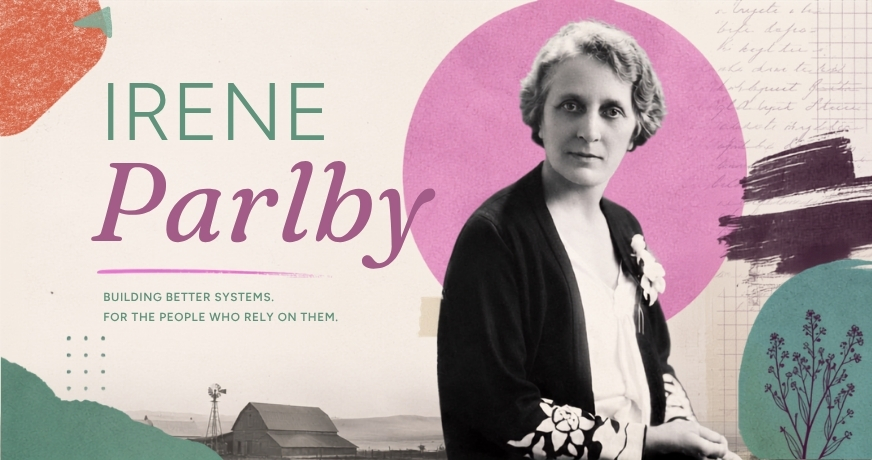
She wasn't the loudest member of the Famous Five, but Irene Parlby quietly transformed rural healthcare, education, and public services for generations of Canadians. Discover how her systems-first approach mirrors modern UX and why some of history's biggest changes happen far from the spotlight.

Not everyone changes history by standing at the front of the parade. Some people rewrite the route while everyone else is distracted.
When people talk about the Famous Five, Irene Parlby is usually the one who gets the shortest paragraph.
- Emily Murphy was the first female magistrate.
- Nellie McClung gave fiery speeches and staged political theatre.
- Louise McKinney became the first woman elected to a legislature.
- Henrietta Muir Edwards spent decades building legal arguments.
And then there’s Irene Parlby. Often introduced as “the farmer.”
Which is… technically true. It’s also a bit like describing the internet as “a place with computers.” Because Irene Parlby wasn’t simply representing rural women. She was quietly redesigning an entire political system from the inside.
Growing Up Before Women Were Expected to Lead
Irene Parlby was born in London, England in 1868 into a well-off family.
She received an education that many women of her time never had access to, but even then, the expectations were fairly clear.
Learn.
Be polite.
Marry well.
Support your husband.
Instead…
She moved to Alberta with her husband Walter to run a farm.
Now, if you’ve romanticized early prairie farming because of old paintings…Don’t.
It was brutally difficult. Long hours. Isolation. Little infrastructure. Few medical services. Minimal education.
And rural women often carried an impossible workload. They ran households, raised children, worked the land, managed finances, helped neighbours, all while having almost no political voice.
A Handy Timeline
| Year | What Happened | Why It Matters |
|---|---|---|
| 1868 | Born in London, England. | Grew up with educational opportunities that many women of her era did not have. |
| 1896 | Married Walter Parlby and immigrated to Alberta. | Experienced firsthand the realities and challenges of rural prairie life. |
| 1916 | Became the first president of the United Farm Women of Alberta. | Began advocating for better healthcare, education, and public services for rural communities. |
| 1921 | Elected to Alberta’s Legislative Assembly. | Became one of Alberta’s first female MLAs and later the province’s first female cabinet minister. |
| 1927 | Joined the Famous Five in petitioning the federal government. | Asked whether women were legally considered “persons” under Canadian law. |
| 1928 | Supreme Court of Canada ruled women were not “qualified persons.” | The Famous Five refused to accept the decision. |
| 1929 | The Judicial Committee of the Privy Council overturned the ruling. | Women were legally recognized as “persons,” establishing the Living Tree Doctrine. |
| 1930s | Continued advocating for rural healthcare, education, and social services. | Helped shape many of Alberta’s public institutions beyond the Persons Case. |
| 1965 | Passed away at age 96. | Left a legacy of improving public systems for everyday Canadians. |
Rural Women Were Invisible
One of the things history sometimes forgets is that cities weren’t the only places needing reform.
Rural communities had enormous problems. Schools were inconsistent. Healthcare barely existed. Roads were poor. Communication was slow.
Government decisions were often made by people who had never lived outside major centres. Sound familiar? Designing services without talking to the people using them isn’t exactly a new invention.
UX Law Memo:
Jacob’s Law
“Users spend most of their time on other sites, and expect similar patterns.”
Connection:
Urban policymakers often designed services based on what made sense from their own perspective, assuming rural communities functioned the same way. Parlby challenged those assumptions by bringing lived experience into government discussions..
Parallel takeaway:
Designing for yourself instead of your users almost always creates friction. Great UX starts with understanding how your audience already lives, thinks, and solves problems—not how you wish they did.
The United Farm Women of Alberta
Instead of accepting this, Parlby joined the United Farm Women of Alberta. At first glance, the organization sounds like it would mostly discuss agriculture.
It did. But it also discussed:
- Education.
- Healthcare.
- Public policy.
- Child welfare.
- Political representation.
Basically everything required to build functioning communities. Parlby quickly became one of its strongest leaders. Not because she was loud. Because she was relentlessly practical.
She listened. Organized. Built consensus. Found evidence. Then kept pushing until something changed.
UX Law Memo:
Law of Proximity
“Objects close together are perceived as belonging together.”
Connection:
Parlby understood this long before UX existed. She recognized that healthcare, education, transportation, agriculture, and family wellbeing weren’t separate issues—they were all part of one connected experience for rural communities. Rather than treating each problem individually, she worked to improve the entire ecosystem.
Parallel takeaway:
Good UX groups related information, actions, and services together so users understand how everything connects. Whether designing a government service or a website, people should never have to mentally stitch disconnected pieces together.
Becoming Alberta’s First Female Cabinet Minister
In 1921, Irene Parlby was elected to Alberta’s Legislative Assembly. Soon after, she became Alberta’s first female cabinet minister. That alone was historic. But what she actually did matters even more.

As Minister Without Portfolio*, she focused heavily on:
- rural healthcare
- public health nursing
- hospitals
- maternity care
- education
- support for farming communities
Many of these weren’t flashy political victories. They were infrastructure. The kind of work people only notice when it’s missing. Which, coincidentally, is also how good user experience works.
*A Minister Without Portfolio is a government official who holds a seat in the Cabinet but is not assigned to manage a specific government department. They participate in collective decision-making and handle ad-hoc projects or broad policy priorities.
UX Law Memo:
Tesler’s Law
“Every system contains a certain amount of unavoidable complexity. The goal isn’t to eliminate complexity—it is to decide where it belongs.”
Connection:
Healthcare, education, and rural infrastructure were inherently complicated problems. Parlby couldn’t make them simple, but she could make the systems easier for citizens to navigate by improving access and coordination.
Parallel takeaway:
Good UX doesn’t remove complexity—it hides unnecessary complexity from the people who shouldn’t have to deal with it.
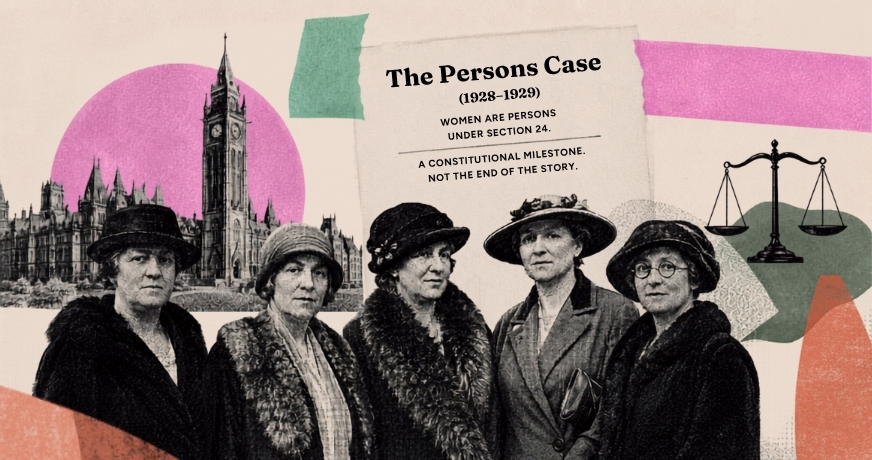
The Persons Case
Like the other members of the Famous Five, Parlby helped launch the legal challenge that asked a deceptively simple question:
Were women legally considered “persons” under Canadian law?
Today that sounds absurd. Of course women are persons.
But in 1927…That wasn’t how Canada’s highest court interpreted the Constitution.
The Supreme Court of Canada ruled against them. Most people would’ve stopped there. The Famous Five didn’t. They appealed to Britain’s Judicial Committee of the Privy Council.
In 1929, Lord Sankey delivered what became one of Canada’s most important constitutional decisions.
Women were legally recognized as persons eligible for appointment to the Senate.
Even more importantly…
He introduced the “living tree” doctrine.
The idea that Canada’s Constitution should grow and adapt over time rather than remain frozen in the beliefs of the 1800s.
That’s still one of the foundations of Canadian constitutional law today.
UX Law Memo:
Goal-Gradient Effect
“People become increasingly motivated as they perceive themselves getting closer to a goal”
Connection:
After the Supreme Court ruled against the Famous Five, they could have accepted defeat. Instead, they appealed to the Privy Council, pushing through the final stretch until legal recognition was achieved.
Parallel takeaway:
Users are more likely to complete a task when they can clearly see their progress. Whether designing a multi-step form or advocating for systemic change, visible progress encourages persistence.
She Didn’t Just Fight For Women
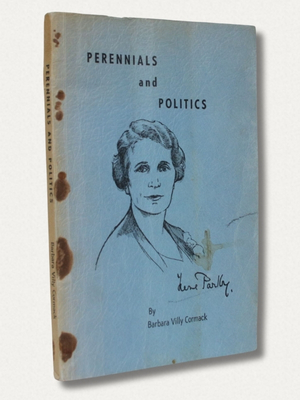
One thing that’s easy to miss is that Parlby’s work wasn’t only about gender.
She believed governments had responsibilities toward public wellbeing.
Healthcare.
Education.
Community services.
Agriculture.
Families.
Whether every decision she supported would still align with modern values is another discussion entirely. Like many historical figures, some of her views reflected the limitations and prejudices of her era.
History isn’t cleaner because we ignore those contradictions. It’s more useful because we acknowledge them.
Why Irene Parlby Matters Today
If McClung specialized in changing minds…
Murphy specialized in changing legal systems…
Parlby specialized in changing public services.
She asked practical questions.
Who isn’t being served?
Why?
What barriers exist?
How do we remove them?
That’s remarkably close to how modern service design operates. Not by starting with solutions. By starting with people.
UX Law Memo:
Peak-End Rule
“People tend to remember experiences by their most intense moment and how they end.”
Connection:
The Persons Case is often remembered as the defining achievement of the Famous Five, but that can overshadow the decades of policy work Parlby devoted to improving everyday life for rural Canadians.
Parallel takeaway:
Big milestones matter, but everyday experiences shape people’s lasting impressions. Great UX focuses on the complete journey, not just the headline feature.
Final Thoughts
Systems are rarely changed by speeches alone. They’re changed by people willing to understand how things actually work. Then patiently make them work better.
Irene Parlby spent decades doing exactly that. She didn’t simply advocate for women. She helped redesign the systems that affected their everyday lives. And perhaps that’s the most enduring lesson for anyone working in UX today.
Real change rarely begins with interfaces. It begins with listening.
This Blog Is Part of a Larger Series
This article is part of Said Quietly, a series exploring the remarkable women whose ideas, persistence, and leadership helped shape Canada—and what their stories can still teach us about user experience, accessibility, inclusion, and designing systems that work for everyone.
If you enjoyed learning about Irene Parlby, you may also like:
- Emily Murphy: The first female magistrate in the British Empire and the legal spark behind the Persons Case.
- Nellie McClung: The suffragist who used humour, storytelling, and satire to change public opinion.
- Henrietta Muir Edwards: The researcher whose decades of advocacy laid the legal foundation for change.
- Louise McKinney: The first woman elected to a legislature in the British Empire and a champion of political representation.
- The Persons Case: The landmark constitutional challenge that changed how Canada defines who is legally recognized as a “person.”
Together, these stories remind us that meaningful change rarely comes from one person alone. It comes from many people solving different pieces of the same problem—often quietly, patiently, and long before history remembers their names.